

『Insertion Type Ultrasonic Flow Meter: Aligning Wetted Acoustic Transducers across Large Metal Pipes』Related information(v cone flow meter|rotary gas meter|gallon meter|gear meter|metal tube rotameter|glass tube rotameter|nutating disk meter|transit time ultrasonic flow meter|wedge flow meter|pd meters|hydraulic flow meter|ultrasonic water flow meter|water flow meter|air flow meter|magnetic water flow meter|oxygen flow meter|gas flow meter|argon flow meter|air velocity meter|gasoline flow meter|fuel flow meter|ultrasonic water meter|digital water meter|nitrogen flow meter|solid flow meter|Oxygen tank flow meter|digital water flow meter|diesel fuel flow meter|steam flow meter|02 flow meter|compressed air flow meter|oil flow meter|liquid flow meter)
Insertion Type Ultrasonic Flow Meter: Aligning Wetted Acoustic Transducers across Large Metal Pipes
Quick Answer: Insertion type ultrasonic flow meters with wetted acoustic transducers measure flow on large metal pipes from DN50 to DN3000. Silver Automation Instruments supplies these meters for water, wastewater, cooling water, and chemical liquids. For a quick quote send pipe size, wall thickness, fluid, pressure, temperature, and flow range.
Why Alignment of Wetted Transducers Matters on Metal Pipes
Wetted acoustic transducers go inside the pipe wall. The two transducers send and receive ultrasonic pulses. Alignment errors change the signal path. On a DN600 carbon steel pipe a 1 mm lateral offset can reduce signal strength by 10 percent or more. Most engineers skip this part. We have seen misaligned sensors cause negative flow readings on site.
Metal pipes make this harder because the inner wall is not always smooth. Rust, scale, or weld seams can shift the acoustic beam. A rigid mounting fixture holds the transducers at the correct angle. The fixture also controls insertion depth. Without a good fixture the meters drift after commissioning.
How Silver Instruments Handles Wetted Transducer Alignment
Silver Automation Instruments builds insertion type ultrasonic flow meters with alignment rails and marked insertion depths. Each pair of wetted transducers comes with a spacing tool. The tool uses pipe outer diameter and wall thickness to set the distance. For DN200 to DN1200 pipes we often use a Z path configuration. For DN50 to DN200 pipes a V path works better.
Here is the thing. All wetted transducers are installed through a ball valve. This allows hot tap installation without stopping the process. The transducers can be removed for cleaning while the pipe stays under pressure. The alignment fixture keeps the replacement transducer in the same acoustic plane.
Installation Steps for Metal Pipes
Step one. Measure the outer diameter and wall thickness with an ultrasonic thickness gauge. Do not trust the nominal pipe schedule. Step two. Mark the two insertion points on opposite sides or adjacent sides of the pipe. Use the spacing tool from Silver Instruments. Step three. Weld the insertion fittings or use a saddle clamp. Step four. Mount the ball valves and hot tap the pipe. Step five. Insert the wetted transducers to the marked depth. Tighten the compression fittings. Step six. Connect the transmitter and check the signal quality.
In practice most installation problems come from wrong wall thickness values. A paint manufacturer in Southeast Asia had a DN400 stainless steel pipe with heavy wall schedule. The site used nominal wall thickness. The signal was weak. Silver Instruments sent the correct spacing tool and the meter started reading within 2 percent of a reference flow meter.
Recommended Pipe Sizes and Operating Limits
Silver Instruments insertion type ultrasonic flow meters cover DN50 to DN3000 for metal pipes. The wetted transducers suit carbon steel, st
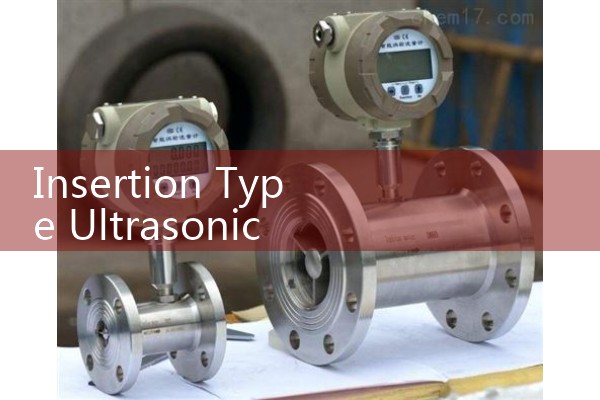
Outputs include 4 to 20 mA HART, Modbus RTU, and pulse. The transmitter housing is IP66 rated. Intrinsically safe versions meet ATEX Zone 1 and IECEx for gas or dust areas. For custody transfer applications we supply dual path or four path insertion meters with better uncertainty.
Common Applications Across Industries
Water and wastewater plants use insertion ultrasonic meters on raw water intakes from DN400 to DN1600. One customer in Vietnam measures seawater feed to a desalination plant on DN900 carbon steel. The meter runs 24 hours per day with biofouling control. Cooling water loops in Middle East HVAC systems use insertion meters on DN600 to DN800 pipes. Chemical plants measure acids and solvents where the wetted materials are PVDF or 316L stainless steel.
For oil and gas produced water lines the insertion type meter survives sand and scale. Silver Instruments can supply titanium wetted transducers for seawater service. Brass and copper systems are also common in marine engine cooling. Tell us your fluid and we will confirm wetted material compatibility.
FAQ
Question 1. Can insertion ultrasonic flow meters be installed on a live pipe?
Yes. Use a hot tap assembly with a ball valve. The pipe stays under pressure during installation and removal. This works up to 40 bar on most metal pipes.
Question 2. What fluids work with wetted acoustic transducers?
Water, wastewater, seawater, cooling water, light chemicals, and some hydrocarbons. The liquid must have less than 5 percent solids or gas bubbles by volume for stable readings.
Question 3. How do you align the transducers on a large metal pipe?
Silver Instruments provides a spacing tool and insertion depth markings. The installer uses pipe outer diameter and measured wall thickness. The fixture locks the transducer angle. This keeps both sensors on the same acoustic path.
Question 4. What is the typical accuracy on a DN600 carbon steel pipe?
For DN200 and larger pipes the standard meter reads within plus or minus 1 percent of actual flow. With in situ calibration on a DN600 pipe we often see better than 0.5 percent.
Question 5. Which pipe materials are supported?
Carbon steel, stainless steel, ductile iron, copper, and some reinforced plastic pipes with metal sleeves. Send the pipe material and wall thickness for a quick check.
Need a quote for an insertion type ultrasonic flow meter on a large metal pipe. Send us your pipe size (DN), wall thickness, fluid, pressure (bar), temperature (°C), and flow range. Call Silver Automation Instruments at +86-25-68650347. Message us on Whatsapp +86-25-52155837 or WeChat +86 15365082610. We respond within 24 hours.
 Hot Product
 Related AD