

『Refrigerant Flow Meter ml/min: Ultra-Low Injection; strictly for laboratory or precision dosing environments.』Related information(v cone flow meter|rotary gas meter|gallon meter|gear meter|metal tube rotameter|glass tube rotameter|nutating disk meter|transit time ultrasonic flow meter|wedge flow meter|pd meters|hydraulic flow meter|ultrasonic water flow meter|water flow meter|air flow meter|magnetic water flow meter|oxygen flow meter|gas flow meter|argon flow meter|air velocity meter|gasoline flow meter|fuel flow meter|ultrasonic water meter|digital water meter|nitrogen flow meter|solid flow meter|Oxygen tank flow meter|digital water flow meter|diesel fuel flow meter|steam flow meter|02 flow meter|compressed air flow meter|oil flow meter|liquid flow meter)
Refrigerant Flow Meter ml/min: Ultra-Low Injection; strictly for laboratory or precision dosing environments
Quick Answer: For liquid refrigerant injection below 10 ml/min, a micro Coriolis flow meter with DN2 or DN3 connections gives direct mass flow without needing density corrections. Silver Instruments supplies these meters with 4-20 mA HART, PT1000 temperature output, and ATEX Zone 1 options. Most lab setups get stable readings down to 0.5 ml/min for R134a, R1234yf, and R290.
Here is the thing. Measuring a refrigerant flow rate of 2 ml/min is not like measuring 20 L/min of chilled water. At this ultra-low range the fluid is often subcooled liquid under 10 bar back pressure and the flow itself generates almost no inertia. A turbine meter will stall. A thermal mass meter will drift when the refrigerant blend changes even slightly. We have seen this on customer sites many times. A refrigeration research lab in Thailand last year tried a glass tube rotameter for R1234yf injection at 3 ml/min. The float stuck twice a day because oil traces changed the annular gap. They replaced it with one of our micro Coriolis meters and the data scatter disappeared.
Why a Micro Coriolis Meter Wins in Laboratory Dosing
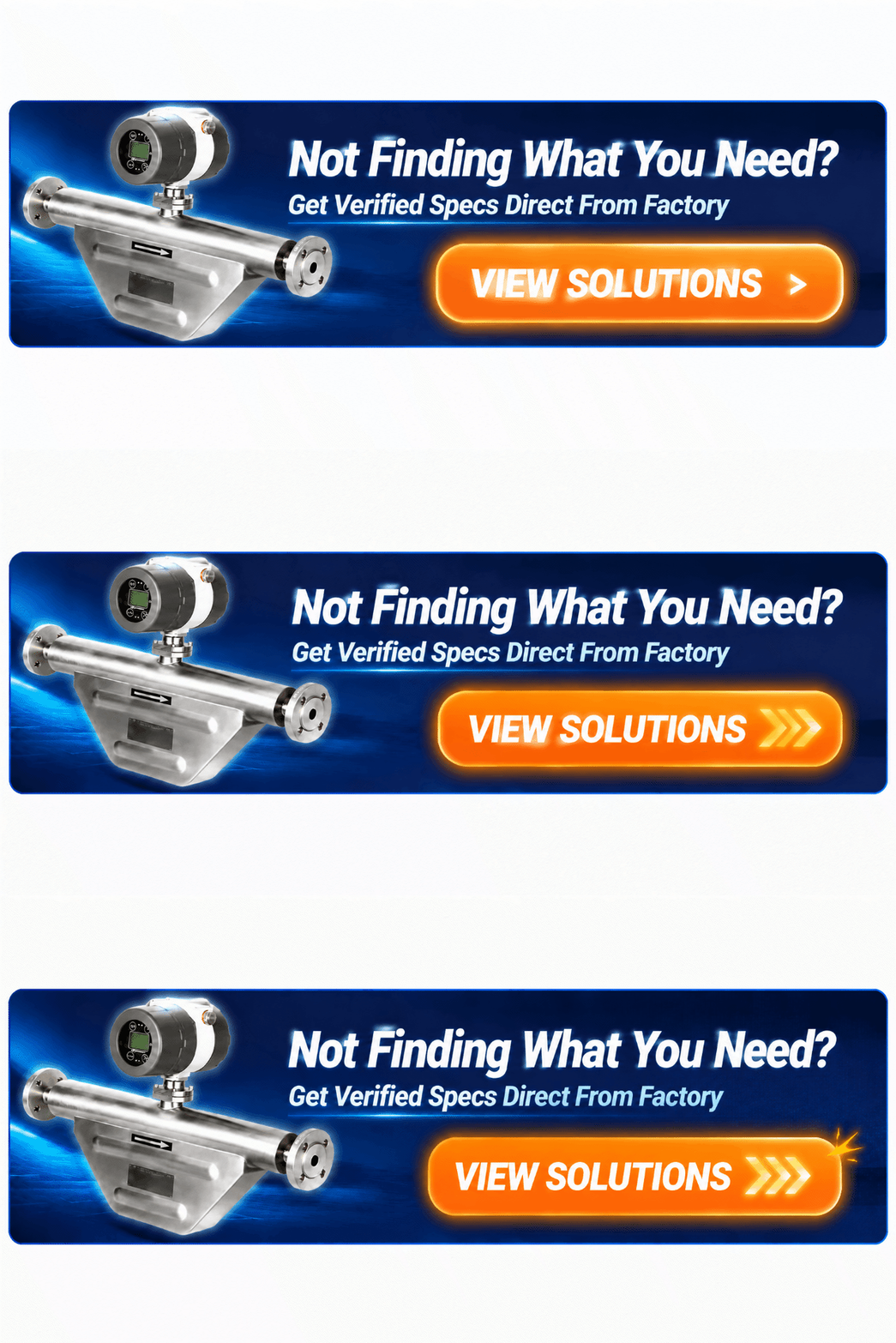
Coriolis meters measure mass flow directly. They do not care if your refrigerant is R134a, R513A, or a propane-based blend. Viscosity below 5 cP, fluid temperature from -40 °C to +85 °C, and pressure swings up to 40 bar do not shift the zero point in a well-built meter. Silver Instruments uses a welded dual U-tube design in channels as small as 0.8 mm ID. You get a true mass flow reading in g/min or kg/h that you can convert to ml/min using the actual density at your process temperature. This matters because a dosing pump calibration in ml/min is easy to cross-check when you record mass flow and temperature together.
Most engineers skip this part but the sensor excitation frequency matters under 50 g/h. Our micro Coriolis drives the tubes at a high resonance, typically above 400 Hz, which keeps the phase shift measureable even at 0.5 ml/min. The noise floor stays below 0.02 % of full scale. In practice that means you can record stable 4-20 mA signals for a syringe pump delivering R290 at 1.5 ml/min, without software damping that hides real fluctuations.
Specifications You Will Actually Use
You do not need a 30-page datasheet right now. You need a few numbers that determine if the meter fits your test bench. Our ultra-low flow refrigerant meters come in three wetter parts: stainless steel 316L, Hastelloy C22, or PTFE-lined for aggressive blends. Nominal bore sizes are DN1.5, DN2, and DN3. The standard flow range is 0.5 ml/min to 500 ml/min for liquids with density similar to R134a. Accuracy is ±0.2 % of reading for liquid, not a percentage of full scale. Repeatability is better than 0.05 %. The meter outputs 4-20 mA HART, a pulse for totalising, and a direct PT1000 temperature signal. You can run it on 24 V DC and connect to a PLC or a paperless recorder. For labs that handle flammable refrigerants like R290, we supply ATEX Zone 1 versions with Ex d IIC T6 Gb certification. The process connections are typically 1/8 inch NPT female or 3 mm Swagelok tu
Installation Tips for a Lab Bench
Because the meter has no moving parts and no requirement for straight upstream pipe, you mount it directly after your syringe pump or micro annular gear pump. Fix the meter body to a rigid aluminium profile frame. Do not hang it by the process tubes only. If your bench has a high vibration stirrer, place a small silicone pad under the meter bracket. Air bubbles kill a micro Coriolis signal faster than anything else. Install a small bubble trap or prime the line by flushing refrigerant liquid at 10 bar before you start data logging. A paint manufacturer in Malaysia used this exact setup for a paint additive metered at 8 ml/min with refrigerant as the carrier solvent. Their repeatability stayed inside 0.3 % over eight months.
Getting a Quote That Matches Your Setup
A useful quote needs specific inputs. Generic "refrigerant flow meter price" requests usually end with a meter that does not fit the real operating point. Send us your refrigerant type (for example R134a, R1234yf, R290, R455A), flow range in ml/min, operating pressure in bar, inlet temperature in °C, and your preferred process connection size. Also tell us if you need ATEX or IECEx. Our engineers will verify wetted material compatibility against your refrigerant blend and propose a meter with the right tube wall thickness and sensor sealing. Typical delivery for a micro Coriolis with standard 316L wetted parts is 3 to 4 weeks.
Contact Silver Instruments directly:
Email: [email protected]
Tel: +86-135-1213-1526
Whatsapp: 86-135-12131526
WeChat: +86 13512131526
Ultra-Low Refrigerant Flow Meter FAQ
What is the smallest flow you can measure for liquid refrigerant?
We reliably measure down to 0.5 ml/min for liquid refrigerants like R134a and R1234yf. The meter signals stay stable below 1 ml/min as long as the line is fully liquid and bubble-free.
Can this meter work with R290 propane or other flammable refrigerants?
Yes. We supply an ATEX Zone 1 certified version with Ex d enclosure for A3 refrigerants. The wetted parts are stainless steel or Hastelloy and the sensor is sealed against gas ingress.
What output signal is best for laboratory data systems?
4-20 mA HART is the most common. It transmits flow, temperature, and density over two wires. You can also use a pulse output for totalised injection volume. Our meters support Modbus RTU over RS485 if you need digital communication.
Do I need to re-calibrate when I change refrigerant blends?
No re-calibration is needed. Coriolis meters measure mass flow independent of fluid properties. The density reading will change because the blend density changes, but the mass flow accuracy stays within specification.
How long is delivery for a micro Coriolis flow meter for laboratory use?
Standard 316L meters with DN2 connections and 4-20 mA HART are usually shipped in 3 to 4 weeks ARO. Custom connections or Ex-proof certification may add 1 to 2 weeks. We ship by DHL or FedEx directly to research labs worldwide.
 Hot News
 Related AD