

『Heat Flow Meter Apparatus: Thermal Conductivity Testing Equipment』Related information(v cone flow meter|rotary gas meter|gallon meter|gear meter|metal tube rotameter|glass tube rotameter|nutating disk meter|transit time ultrasonic flow meter|wedge flow meter|pd meters|hydraulic flow meter|ultrasonic water flow meter|water flow meter|air flow meter|magnetic water flow meter|oxygen flow meter|gas flow meter|argon flow meter|air velocity meter|gasoline flow meter|fuel flow meter|ultrasonic water meter|digital water meter|nitrogen flow meter|solid flow meter|Oxygen tank flow meter|digital water flow meter|diesel fuel flow meter|steam flow meter|02 flow meter|compressed air flow meter|oil flow meter|liquid flow meter)
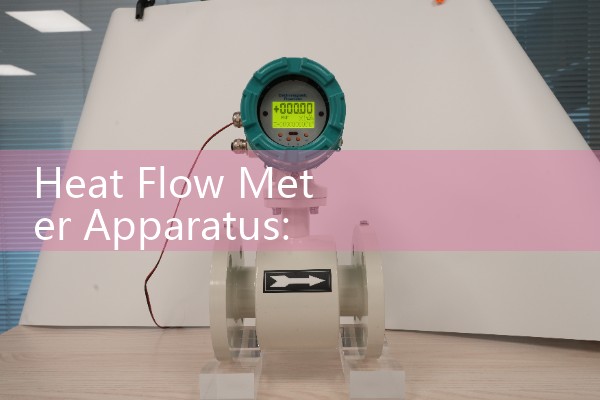
Heat Flow Meter Apparatus for Reliable Thermal Conductivity Testing
Quick Answer: A heat flow meter apparatus measures the thermal conductivity of insulation materials, polymers, and composites under steady state conditions. Silver Automation Instruments supplies these systems with dual-plate design, PT100 temperature sensors, and compliance to ASTM C518 and ISO 8301. Send us your material type, thickness, and required test temperature for an immediate quote.
Thermal conductivity testing is not a guessing game. Engineers who work with building insulation, cold chain packaging, or fireproof boards need repeatable numbers. A heat flow meter apparatus gives you those numbers without the complexity of guarded hot plate systems. It uses a cold plate and a hot plate to create a known temperature gradient across a flat sample. Two calibrated heat flux transducers measure the heat flow. The system then calculates thermal conductivity in W/(m·K). That is the principle. In practice, it is fast. A single test often takes 30 to 60 minutes once the sample reaches equilibrium. Most technicians prefer this method over transient plane source methods for rigid or compressible materials because it follows well documented international standards.
Silver Automation Instruments has seen this demand grow in Southeast Asia and the Middle East. A insulation manufacturer in Saudi Arabia recently needed to test 50 mm thick rockwool panels at a mean temperature of 25 °C. Our recommended heat flow meter apparatus handled the job with an accuracy of ±1 % and a reproducibility of 0.5 %. Because the system uses direct measurement of heat flux, the operator did not need to apply any correction factors. That made daily quality control much simpler.
How the Measurement Head Works
The apparatus includes a metering chamber, two flat plates, and precision PT100 RTD sensors. One plate heats up, the other cools down. A sample, typically 300 mm by 300 mm, sits between them. Pneumatic pressure keeps the contact resistance low. Two heat flux transducers, embedded in the plates, output signals proportional to the heat flow. The data acquisition unit reads these signals along with plate temperatures. It then computes thermal conductivity. Here is the thing: the system works best with homogeneous materials. If you test reflective foils, you must add thin black layers to suppress radiation. Most test labs already know this trick.
The standard temperature range goes from -20 °C to 80 °C. For special applications, we can extend it down to -30 °C with an external chiller. We integrate a 7-inch touchscreen with 4-20 mA analog outputs and Modbus RTU over RS485. This means you can log data into a paperless recorder or SCADA easily. Many engineers skip this part, but they later wish the unit had industrial communication already built. Ours comes standard.
Materials You Can Test
Expanded polystyrene, extruded polystyrene, mineral wool, foam glass, aerogel blankets, and silicone rubber are common. A paint manufacturer in Vietnam once tested dried coating layers to verify thermal barrier properties. They used a small sample adapter with reduced plate area. The results helped them adjust filler content. This is the kind of real world use
Technical Specifications at a Glance
Thermal conductivity range: 0.001 to 2.0 W/(m·K). Measurement accuracy: ±1 % to ±2 % depending on material. Sample size: 300 x 300 mm standard, 150 x 150 mm optional. Thickness: up to 100 mm. Temperature control: PID with stability of ±0.05 °C. Heat flux transducer sensitivity: typical 3 µV/(W/m²). Power supply: 220 VAC 50 Hz or 110 VAC 60 Hz. The unit complies with ASTM C518, ISO 8301, GB/T 10295, and EN 12667. These test standards are what procurement engineers ask for first.
Why Deal with Silver Automation Instruments
You get the apparatus, a set of reference samples, a calibration certificate traceable to NIST, and free remote training over video call. We ship DAP to Jakarta, Dubai, Lagos, or Valparaíso. Our team has installed units in Chile, Indonesia, and Turkey. So we understand the power fluctuations and humidity conditions at your end. A plastic pipe insulation producer in Brazil told us the silica gel desiccant we included saved their sensor from mold during rainy season. Small things matter.
To request a spec sheet or price, contact Silver Instruments directly. Send an email with your sample material, size, and required test temperature. We will suggest the right plate configuration and cooling method. You can reach us by email at [email protected], call +86-135-1213-1526, or message us on WhatsApp at 86-135-12131526. WeChat users can reach us at +86 13512131526. A quick message with your application details gets a same day reply.
FAQ: Heat Flow Meter Apparatus
Q: What thermal conductivity range can the apparatus measure?
The typical range is 0.001 to 2.0 W/(m·K). That covers most insulating materials. For high conductivity materials above 2.0 W/(m·K), we recommend the guarded hot plate method.
Q: Which international standards does the equipment meet?
Our heat flow meter apparatus meets ASTM C518, ISO 8301, GB/T 10295, and EN 12667. The calibration follows the standard reference material NIST SRM 1450d.
Q: Can I test thin reflective foils?
Yes. But you need to coat them with a high emissivity paint or use a thin rubber sheet to suppress radiative heat transfer. We can supply the correct emissivity tape with your order.
Q: How long does it take to get a quotation?
If you send us your sample dimensions, temperature range, and lab power supply, we will provide a formal quote within 24 hours. This is not an automatic email. An engineer reviews your request.
Q: Do you offer after sales service in the Middle East and Southeast Asia?
We do. Silver Automation Instruments supports customers via remote video sessions, and we have local service partners in Dubai, Jakarta, and Bangkok for onsite repairs if needed. Spare parts ship within 3 working days.
 Hot Blog
 Related AD