

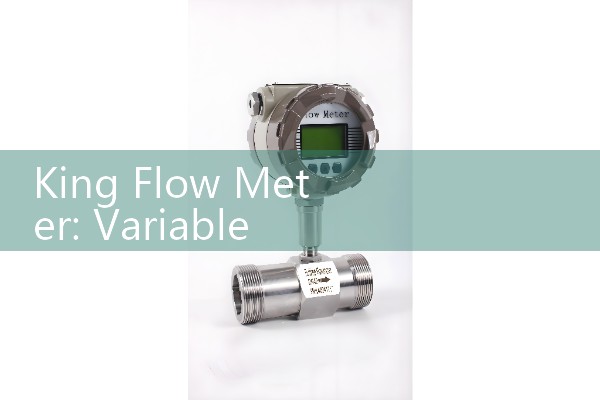
『King Flow Meter: Variable Area Rotameters and Glass Measuring Tubes』Related information(v cone flow meter|rotary gas meter|gallon meter|gear meter|metal tube rotameter|glass tube rotameter|nutating disk meter|transit time ultrasonic flow meter|wedge flow meter|pd meters|hydraulic flow meter|ultrasonic water flow meter|water flow meter|air flow meter|magnetic water flow meter|oxygen flow meter|gas flow meter|argon flow meter|air velocity meter|gasoline flow meter|fuel flow meter|ultrasonic water meter|digital water meter|nitrogen flow meter|solid flow meter|Oxygen tank flow meter|digital water flow meter|diesel fuel flow meter|steam flow meter|02 flow meter|compressed air flow meter|oil flow meter|liquid flow meter)
Quick Answer: King flow meters are variable area rotameters that use glass measuring tubes for direct visual flow indication of low-viscosity liquids and gases. Silver Automation Instruments supplies genuine King instruments and equivalent rotameters with full technical support to Australia, Southeast Asia, and the Middle East. Most engineers choose this design because it needs no power supply and works reliably in simple dosing, purging, and sampling lines.
In practice, many water treatment plants, chemical dosing skids, and food processing lines still rely on a transparent tube with a floating ball or piston. The reading is immediate. You do not need a 24 V DC loop, a transmitter, or a digital display if the process just needs a local flow check. We see this on customer sites from Perth to Ho Chi Minh City. A desalination plant operator in Manila recently told us they replaced a faulty magnetic flow meter on an antiscalant line with a glass tube rotameter because the 4-20 mA signal was not really used. That is a common story.
What a Variable Area Rotameter Actually Measures
A rotameter works on a simple principle. A float inside a tapered glass or metal tube rises as flow increases. The annular gap between the float and the tube wall grows larger, so the differential pressure stays nearly constant. King flow meters use a precision-machined float and a borosilicate glass tube with a direct-reading scale. Typical accuracy for a glass tube unit is ±2% to ±4% of full scale, depending on the tube size and the calibration fluid. Most standard units are calibrated for water at 20 °C or air at 1.013 bar absolute and 20 °C. If your fluid viscosity is above 10 cP or the density is very different from water, the reading will shift and you may need a correction factor.
Glass Measuring Tubes vs Metal Tubes
Glass tubes are what most people picture when they hear the word rotameter. They are the right choice for fluids that are not hazardous at moderate pressure and temperature. A borosilicate glass tube with a stainless steel or PTFE float can handle pressures up to 10 bar and temperatures up to 100 °C. We have supplied King 7520 series glass tube rotameters to a beverage plant in Thailand for CO₂ gas flow monitoring, where the pressure stays around 6 bar and a clear view of the float is important for shift operators. When the process pressure rises to 40 bar or the media is steam, hot oil, or a flammable solvent, a metal tube rotameter with a magnetic follower is the standard route. These can be built with 4-20 mA HART transmitters, two-wire loop power, and ATEX Zone 1 intrinsically safe certification. A marine fuel monitoring job we did for an offshore supply vessel in Malaysia required a fully stainless steel metal tube rotameter rated for 40 bar, with an Ex ia IIC T4 transmitter. That is not something a glass tube can handle.
Where King Flow Meters Fit in Your Plant
Typical applications cover a range that many newer technologies miss. A pharmaceutical company in Melbourne uses a small King glass tube rotameter on a nitrogen blanket line at 2 L/min because a Coriolis meter would be overkill. A municipal water treatment plant in Sydney uses four units to check chlorine gas flow into contact tanks. A chemical blender in Indonesia uses armored metal tube rotameters on a 50 mm (DN50) solvent transfer line, with a local indicator plus 4-20 mA output sent back to a PLC. In food and bev
Ordering a Rotameter from Silver Automation Instruments
We keep stock of standard glass tube rotameters in sizes from DN15 to DN50. Typical water flow ranges cover 1 L/h to 10,000 L/h and air ranges from 0.05 Nm³/h to 200 Nm³/h. Options include needle valves, alarm switches, and 4-20 mA output with HART protocol for metal tube versions. When you ask for a quote, please specify media, normal and maximum flow rate, operating pressure and temperature, pipe size (DN), and any hazardous area requirement. Send us your pressure (bar), temperature (°C), pipe size (DN), and flow range to [email protected]. You can also reach us at Tel: +86-135-1213-1526, WhatsApp: 86-135-12131526, or WeChat: +86 13512131526. Our team usually responds with a data sheet and a commercial offer within 24 hours.
Frequently Asked Questions
Can I get a 4-20 mA output on a glass tube rotameter? Yes, some glass tube models support an add-on magnetoresistive sensor that tracks the float position and transmits a 4-20 mA signal. This works best when the fluid is clear and the float material is magnetic, such as stainless steel 316. The repeatability of this signal is around ±1% of full scale, but accuracy is still dictated by the mechanical calibration. For a true 4-20 mA HART loop with electrical certification, a metal tube rotameter is the cleaner solution.
What is the maximum operating temperature for a King glass tube flow meter? Standard borosilicate glass tubes with PTFE fittings can handle up to 100 °C continuously. If you have a hot liquid or a sterilization cycle above 100 °C, you need to drop the pressure rating or switch to a metal tube design. Most steam applications at 150 °C or higher automatically push you toward a metal tube rotameter.
How long does delivery to Australia take? For standard glass tube rotameters up to DN50, we usually ship within 5 working days from our stock. Air freight to Sydney, Melbourne, Brisbane, or Perth takes another 5 to 7 days. Custom metal tube units with ATEX certification may need 4 to 6 weeks because of the pressure test and documentation package required for hazardous area installation.
Do King flow meters need vertical installation? Yes, rotameters must be installed with the tube in a vertical plane, flow moving upward. A horizontal or tilted mount will cause the float to stick or read incorrectly. This is a hard mechanical constraint that field crews sometimes forget. If your pipe run is horizontal and you cannot add a U-bend to create a vertical section, we will recommend a different flow meter type such as a paddle wheel or ultrasonic clamp-on meter.
What Is the difference between a King flow meter and a generic glass tube rotameter? King Instrument Company uses a specific float design and scale geometry matched to the borosilicate glass tube taper. Generic rotameters may use lower-grade soda-lime glass and less accurate scales. Silver Automation Instruments can supply both original King meters and high-quality equivalent units. If your process requires traceable accuracy and a ISO 9001 certificate, we usually guide customers toward the genuine King product from the US.
 Hot Blog
 Related AD