

『Coriolis Flow Measurement: Mass, Density & Temp』Related information(v cone flow meter|rotary gas meter|gallon meter|gear meter|metal tube rotameter|glass tube rotameter|nutating disk meter|transit time ultrasonic flow meter|wedge flow meter|pd meters|hydraulic flow meter|ultrasonic water flow meter|water flow meter|air flow meter|magnetic water flow meter|oxygen flow meter|gas flow meter|argon flow meter|air velocity meter|gasoline flow meter|fuel flow meter|ultrasonic water meter|digital water meter|nitrogen flow meter|solid flow meter|Oxygen tank flow meter|digital water flow meter|diesel fuel flow meter|steam flow meter|02 flow meter|compressed air flow meter|oil flow meter|liquid flow meter)
What You Really Measure with a Coriolis Meter: Mass Flow, Density, and Temperature
Quick Answer: A Coriolis mass flow meter gives you three live process values from one device: direct mass flow (kg/h or lb/min), fluid density (kg/m³), and temperature (°C). You don’t need separate density meters or temperature transmitters. That alone saves pipe runs, wiring, and I/O cards on small to medium skids. If your product is sold by weight, or you need to track concentration, this is the fastest way to get a full picture of what’s moving inside the pipe.
Not Just a Flow Meter – Three Measurements in One Sensor
Most engineers know that a magnetic flow meter gives volume flow. A vortex meter gives volume flow and maybe a temperature reading if you pay extra. But a Coriolis meter is different. The sensor tube vibrates at its natural frequency. Electronics drive this oscillation and watch how the tube shape deforms when process fluid enters. The phase shift between inlet and outlet gives mass flow. The resonance frequency gives density. The internal PT1000 or PT100 sensor is placed right in the tube wall and gives fluid temperature. No thermowell. No separate insertion point.
Here’s a real case. A palm oil refinery in Indonesia was batching CPO into tankers. They used a positive displacement meter plus a densitometer and a separate RTD. Three devices, three flanges, three potential leak paths. We replaced it with one Silver Instruments Coriolis meter, DN50, 316L, with an integral transmitter. The operator got mass total, density trend, and temperature all on one 4-20 mA HART loop. That reduced their calibration points from three to one. For a 15-kL batch, the uncertainty dropped from 0.5% to 0.15% of reading.
Mass Flow First, Not Volume with Compensation
In gases, volume flow means nothing unless you know pressure and temperature. In liquids, density shifts 0.3–0.5% per 10°C for many chemicals. A Coriolis meter skips the compensation dance. It measures mass directly. So a customer in Qatar running liquid sulphur at 135°C does not care about volume. They need to bill by the metric ton. A DN40 Coriolis sensor with PTFE lining handles that. Direct mass output to the flow computer, no compressibility factor, no density look-up table.
But. You need to size it right. Because Coriolis meters have a pressure drop. More than a full-bore magnetic meter. If you ignore this, you’ll undersize your pump. We saw it happen at a cosmetics plant in Brazil. The engineer ordered a DN15 Coriolis because the flow range was 0–600 kg/h for glycerine. In reality, the viscosity at 25°C was 950 cP. At 600 kg/h, the pressure drop was nearly 2.8 bar across the meter. The pump couldn’t cope. We moved them to a DN20 sensor with a lower pressure drop, and it still delivered 0.1% mass accuracy. Most engineers skip this part. Don’t.
Using Density to Catch Off-Spec Product Instantly
Density is often a waste product of a Coriolis meter. But in some plants, it’s the main reason to install one. A Vietnamese tapioca starch slurry producer needed to hold solids at 18–20°Bx. Before, they took samples every two hours and used a hydrometer. The delay meant 2000 litres of off-spec product going to the dryer before anyone noticed. We helped them install a DN25 Coriolis meter with a density output to their PLC. The density alarm triggers at < 17.5°Bx. Now they catch dilution issues in under three seconds. Not two hours.
Temperature from the same sensor is used to compensate the density back to reference conditions. So if your process runs at 70°C and your density spec is at 20°C, the transmitter does the math inside. You get density at reference temperature on the display. No extra RTD, no external calculator. This works for urea solutions, sodium hydroxide 10–50%, diesel blends, and even chocolate tempering lines.
When You Need Custody Transfer without a Proving Loop
In countries like Nigeria
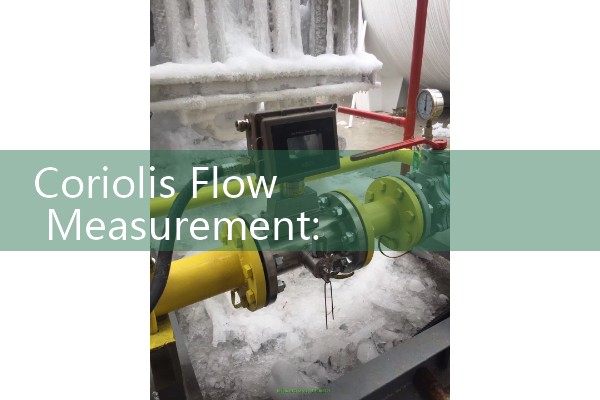
One note. If you have entrained gas, even 1–2% by volume, the Coriolis meter will struggle. The density reading becomes noisy. Mass flow may spike. For truck loading with bottom-up filling, you have to wait until the air is purged. We learned this at a terminal in Mozambique. The solution was a simple vent valve at the high point and a short splash plate. After that, the meter settled within 5 seconds of starting the batch.
Connecting to Your DCS or SCADA: Simple 4-20 mA, HART, or Modbus RTU
The transmitter on a Silver Instruments Coriolis meter comes with three or four 4-20 mA outputs as standard. One for mass flow, one for density, one for temperature. Some models add a pulse output for totalizing. All outputs are galvanically isolated. You can also use HART for the multivariable readout without extra field wiring. For Modbus RTU, the RS485 port gives you all process variables plus diagnostics. Tube frequency, drive gain, amplitude. These diagnostics tell you if the tube is coated, if there’s gas slugging, or if the sensor is stressed.
A food ingredients plant in Malaysia runs our DN15 meter on glucose syrup. Their SCADA reads density on Modbus. If the drive gain climbs above 20%, it alarms. That means the tube is starting to coat. They schedule CIP before the batch fails. That predictive trigger saves them about 200 kg of wasted product per month.
FAQ
1. What’s the smallest and largest pipe size for a Coriolis meter?
Common sizes are DN15 to DN150 for standard models. For micro-flow, we have 1/8" and 1/4" connections that go down to 0–30 kg/h. For large lines, above DN150, we recommend twin-tube designs or parallel meters, because a single large sensor becomes heavy and expensive.
2. Can I use a Coriolis meter for gas flow measurement?
Yes. Sizing changes because mass flow per volume is low. You need to check the turndown and minimum density. Natural gas at 20 bar is fine on a DN25 meter. At low pressure, say 2 bar, the signal is weak. Send us your gas composition, pressure and temperature. We will size it.
3. How do I handle high viscosity fluids above 100 cP?
Coriolis meters love viscous fluids. Pressure drop is your main concern. Use a larger meter size and uprate the pump. Accuracy stays the same or even improves because damping increases. For things like heavy fuel oil at 500 cP, we often specify DN40 for a 1500 kg/h flow where a DN25 would be too tight.
4. Do I need straight pipe runs?
No. This is one of the biggest advantages. No upstream or downstream straight run required. You can install right after a 90° elbow, reducer, or control valve. The meter does not care about flow profile. That saves space on a skid.
5. What about hazardous area approvals?
Our Coriolis transmitters can be supplied with ATEX Zone 1 or Zone 2, IECEx, and NEPSI for China. Sensor housing is intrinsically safe by design. Just tell us the gas group and zone, we configure the nameplate accordingly. For dust environments, we add an Ex td enclosure.
Need a firm price for your project? Send us your fluid name (or composition), flow rate range (min, normal, max), operating pressure, temperature, and pipe size. Our email is [email protected]. We reply with a datasheet and a quotation within the same working day. No generic forms. No "contact us for more info." Just a clear selection based on your process data.
 Hot Blog
 Related AD