

 Current position > Product detail
『Electromagnetic Flow Meter Wiki Guide: History, Technology, and Engineering』Related information(v cone flow meter|rotary gas meter|gallon meter|gear meter|metal tube rotameter|glass tube rotameter|nutating disk meter|transit time ultrasonic flow meter|wedge flow meter|pd meters|hydraulic flow meter|ultrasonic water flow meter|water flow meter|air flow meter|magnetic water flow meter|oxygen flow meter|gas flow meter|argon flow meter|air velocity meter|gasoline flow meter|fuel flow meter|ultrasonic water meter|digital water meter|nitrogen flow meter|solid flow meter|Oxygen tank flow meter|digital water flow meter|diesel fuel flow meter|steam flow meter|02 flow meter|compressed air flow meter|oil flow meter|liquid flow meter)
Electromagnetic Flow Meter Wiki Guide: History, Technology, and Engineering
Quick Answer: An electromagnetic flow meter measures conductive liquid flow with no moving parts and no pressure drop. Water, wastewater, chemicals, slurries, and food grade liquids are the main fluids. Silver Automation Instruments builds magnetic flow meters from DN10 to DN2000 with 0.5 percent or 0.2 percent reading accuracy for plants in Southeast Asia, Australia, the Middle East, Africa, and Latin America.
What Is an Electromagnetic Flow Meter
Engineers call it a magmeter. It works on Faraday law. A magnetic field is generated across the pipe. Electrodes measure the voltage created by the liquid moving through that field. Voltage is proportional to flow velocity. The transmitter converts this signal into flow rate and total flow. No moving parts. No pressure drop. The liquid must have conductivity above 5 µS/cm or 20 µS/cm depending on the transmitter.
History of Magnetic Flow Meters
Michael Faraday tried to measure river flow with magnets in 1832. The signal was too weak for the instruments of that period. The practical magmeter appeared in the 1950s when AC and DC excitation circuits became stable enough for industrial use. Early units were heavy and expensive. In the 1970s and 1980s smaller converters and better liner materials made the technology common in water and chemical plants. Today a DN100 magnetic flow meter often costs less than a mechanical meter of similar size in water treatment projects.
Engineering and Sensor Design
The sensor has three main parts. A carbon steel or stainless steel body. A nonconductive liner. Two or four electrodes. Liner options include PTFE, PFA, hard rubber, EPDM, and polyurethane. Hard rubber suits water and wastewater from 0 to 80 °C. PTFE handles aggressive acids and caustic fluids up to 150 °C. Electrode choices depend on the fluid. 316L stainless steel works for clean water. Hastelloy C resists acids. Titanium suits seawater and brine. Tantalum resists strong acids. Platinum works in high temperature and high pressure applications. Always install grounding rings or grounding electrodes for accurate measurement. Plastic or unlined pipe needs extra grounding.
Transmitter, Outputs, and Accuracy
Silver Instruments transmitters include a local LCD display, three push buttons, and empty pipe detection. Outputs are 4-20 mA HART, pulse, frequency, and RS485 Modbus RTU. Some models add PROFIBUS DP. Accuracy is 0.5 percent of reading for standard versions. For custody transfer or chemical dosing, 0.2 percent of reading is available. Repeatability is 0.1 percent. Power supply can be 220 V AC or 24 V DC. The remote mount transmitter works with IP68 sensors for flooded pits. Integral mount suits clean dry locations.
Typical Applications and Sizing Data
A water treatment plant in Vietnam uses our DN200 rubber lined meter for raw water intake. A dairy in Australia uses a DN25 PTFE lined meter with 316L electrodes for pasteurized milk batching. A chemical site in Saudi Arabia uses DN80 PFA lined meters with Hastelloy C electrodes for 30 percent hydrochloric acid. Most engineers skip this next point. Pipe size is not the only factor. Velocity matters. For water, aim for 1 to 3 m/s in normal operation. For abrasive slurry, keep velocity below 2 m/s. For chemical injection, 0.3 to 0.5 m/s can work. Send us the minimum, normal, and maximum flow r
Silver Instruments Model Range
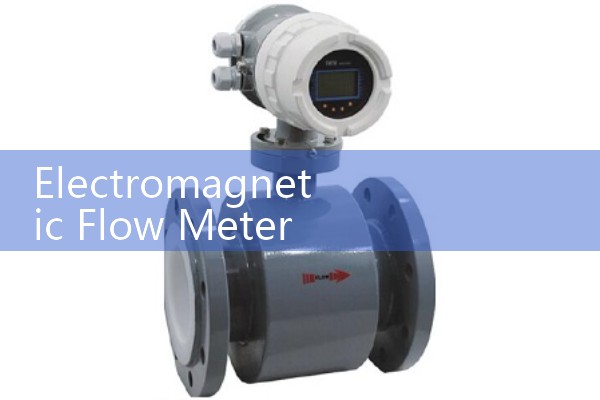
We supply compact and remote electromagnetic flow meters. Compact types save space and cost on small lines. Remote types separate the sensor and transmitter. Use remote versions when the fluid temperature exceeds 120 °C or when the pipe is flooded. Our standard range covers DN10 to DN2000. Pressure ratings include PN10, PN16, PN25, ANSI 150 lb, and ANSI 300 lb. Process temperatures range from minus 25 °C to 150 °C depending on liner selection. ATEX Zone 1 and IECEx options are available for hazardous areas in oil and gas and solvent recovery plants. For seawater desalination, specify PTFE liner with titanium electrodes and 316L grounding rings. For mining slurry, hard rubber liner with polyurethane protection and tungsten carbide electrodes is a common choice.
Installation Notes
Here is the thing. No magnetic flow meter works on a partially full pipe. Because the electrodes need contact with the liquid. So vertical installation should flow upward. But if the line drains after shutdown, use empty pipe detection.
Straight run matters. Use 5D upstream and 3D downstream from bends, tees, or pumps. The pipe must stay full at all times. Mount the sensor with the electrodes horizontal. Air bubbles rise to the top and cause unstable readings. Downward flow is possible but backflow needs special setting. Keep the meter away from strong electromagnetic fields. Use the grounding ring if the pipeline is nonconductive. Most field failures come from poor grounding or wrong cable type for remote mounts.
FAQ: Electromagnetic Flow Meter Selection
Can a magnetic flow meter measure diesel or oil?
No. Diesel, oil, and most hydrocarbons are nonconductive. Use a Coriolis mass flow meter or oval gear flow meter for those fluids. Silver Instruments supplies both types.
What is the minimum conductivity needed?
Most standard transmitters need 20 µS/cm. High input impedance versions can handle 5 µS/cm. For demineralized water or condensate, check the actual conductivity before you order.
Which liner is best for wastewater?
Hard rubber liners work well for raw wastewater and sludge up to 80 °C. For grease or solvent traces, use PTFE or EPDM. Tell us the pH range and temperature. We will select the liner.
Can I use a magnetic flow meter in an explosion proof area?
Yes. Silver Instruments offers ATEX Zone 1 and IECEx certified versions. Specify the gas group and temperature class when you ask for a quote.
How do I get a price and lead time?
Send us your pipe size DN, flow range, pressure bar, temperature Celsius, fluid type, output signal, and quantity. You can call or message us. Tel: +86-25-68650347. Whatsapp: +86-25-52155837. WeChat: +86 15365082610.
For a fast quote, send us the process data. Use pipe size DN, minimum and maximum flow rate, pressure bar, temperature Celsius, fluid name, and conductivity. A standard water meter in DN50 or DN80 often ships in 7 to 10 days. Custom liner and electrode combinations take 15 to 20 days. Silver Automation Instruments supports OEM distributors and plant engineers in Southeast Asia, Oceania, Latin America, Africa, and the Middle East.