

 Current position > News detail
『Ultrasonic Flow Meter Types: Comparing Transit-Time and Doppler Shift Arrays』Related information(v cone flow meter|rotary gas meter|gallon meter|gear meter|metal tube rotameter|glass tube rotameter|nutating disk meter|transit time ultrasonic flow meter|wedge flow meter|pd meters|hydraulic flow meter|ultrasonic water flow meter|water flow meter|air flow meter|magnetic water flow meter|oxygen flow meter|gas flow meter|argon flow meter|air velocity meter|gasoline flow meter|fuel flow meter|ultrasonic water meter|digital water meter|nitrogen flow meter|solid flow meter|Oxygen tank flow meter|digital water flow meter|diesel fuel flow meter|steam flow meter|02 flow meter|compressed air flow meter|oil flow meter|liquid flow meter)
Ultrasonic Flow Meter Types: Transit-Time vs Doppler Shift Arrays
Quick Answer: Transit-time ultrasonic flow meters suit clean liquids such as water, diesel, and chemicals. Doppler ultrasonic flow meters handle dirty liquids with particles or gas bubbles. Choosing the wrong ultrasonic flow meter type often causes unstable readings and failed site acceptance tests.
How a Transit-Time Ultrasonic Flow Meter Works
A transit-time meter uses two transducers. One transducer sends an ultrasonic signal downstream. The other sends a signal upstream. The downstream signal travels faster than the upstream signal. The meter measures the time difference. This time difference is proportional to flow velocity. There are no moving parts. Accuracy on clean liquids is typically ±0.5% to ±1% of reading. Pipe sizes run from DN15 to DN3000.
Transit-time meters need a clean liquid. The liquid should have low suspended solids and low gas content. If the liquid has too many particles or bubbles, the ultrasonic signal scatters. The meter may lose signal. In practice, demineralized water, potable water, chilled water, diesel, and many chemicals with viscosity below 100 cP work well. A water utility in Southeast Asia uses a clamp-on transit-time meter on a DN400 carbon steel pipe. The meter sends a 4-20 mA HART signal to a control room. The site team checks the flow data against an inline electromagnetic flow meter once per month.
How a Doppler Ultrasonic Flow Meter Works
A Doppler meter uses sound reflection. The transducer sends an ultrasonic wave into the liquid. Particles or bubbles reflect the wave. The meter detects the frequency shift. The frequency shift depends on flow velocity. Doppler meters need particles or gas bubbles. Minimum particle size is usually around 100 microns. Concentration should be above roughly 100 ppm. Typical accuracy is ±1% to ±5% of reading depending on the flow profile.
Doppler meters suit wastewater, slurry, mining pulp, dredging, and sludge. A copper mine in Chile installed a Doppler clamp-on meter on a DN150 slurry line. The slurry contained magnetite particles. The meter sent a pulse output to a PLC. The site had a spare electromagnetic flow meter but the liner wore out within six months. The clamp-on Doppler meter had no wetted parts and survived the abrasive flow.
Key Differences Between the Two Ultrasonic Flow Meter Types
Clean liquid is the main dividing line. Transit-time meters measure clean liquids with few particles. Doppler meters measure dirty liquids with enough particles or bubbles. We have seen this on customer sites many times. A wastewater plant in Turkey tried a transit-time clamp-on meter on raw sewage. The readings dropped out whenever gas pockets passed the transducers. The plant replaced the meter with a Doppler clamp-on unit and the signal became stable.
Accuracy is another difference. Transit-time meters are usually more accurate. Doppler meters are more forgiving with solids but less accurate overall. Price also differs by pipe size, transducer type, and signal output. A clamp-on transit-time meter will cost more than a basic Doppler meter in many sizes. The correct choice depends on the liquid condition, not price alone.
Clamp-On, Inline, and Array Configurations
Both types come in clamp-on and inline versions. Clamp-on transducers mount outside the pipe. They do not contact the liquid. Clamp-on fits temporary flow surveys and retrofit projects. Inline spool pieces mount between flanges. Inline suits custody transfer and high accuracy applications. An array means multiple transducer paths. A 4-
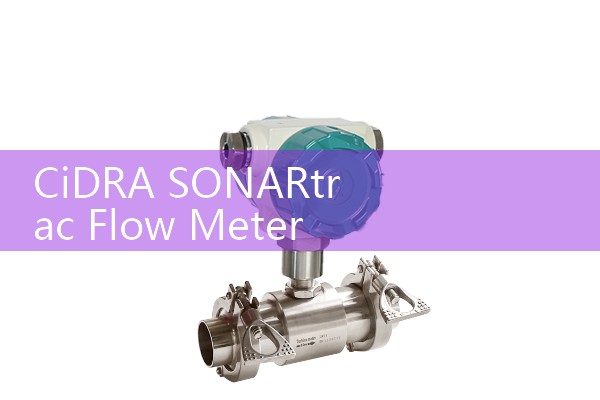
A Doppler shift array uses multiple transducers to cover a wider pipe cross section. This setup helps on large pipes with uneven solids distribution. A transit-time array uses multiple chordal paths. Both array types reduce the effect of distorted flow profiles.
Most engineers skip this part, but straight run matters. For clamp-on transit-time meters, plan for 10D upstream and 5D downstream. Doppler meters are more tolerant but still need 10D upstream when possible. If you have a pump or elbow close to the meter, tell us before you order. We can suggest a different transducer mounting frame or an inline model.
How to Choose the Right Ultrasonic Flow Meter
Start with the liquid. Clean water, demineralized water, diesel, or chemicals. Choose transit-time. Raw wastewater, sludge, slurry, or liquids with gas bubbles. Choose Doppler. Then check the pipe. Pipe material, wall thickness, liner, and diameter all affect the signal. Old pipes with scale can block a clamp-on transit-time signal. Some rubber liners can block Doppler signals. Send us your pipe details and we will check the signal path before quoting.
A desalination plant in Saudi Arabia needed flow measurement on DN600 GRP pipes. We supplied transit-time clamp-on meters with adjustable mounting frames. The customer sent the pipe outer diameter and wall thickness. We set the transducer spacing before shipping. The site team installed the meters in one afternoon. The measured accuracy was better than ±1% on clean seawater.
Silver Automation Instruments Ultrasonic Flow Meter Range
Silver Automation Instruments supplies transit-time and Doppler ultrasonic flow meters. We offer clamp-on and inline types from DN15 to DN3000. Output options include 4-20 mA, pulse, RS485 Modbus, and 4-20 mA HART. We can supply battery powered, mains powered, and ATEX Zone 1 versions. We support projects in Southeast Asia, Oceania, Latin America, Africa, and the Middle East. You can reach our engineers at Tel +86-25-68650347, WhatsApp +86-25-52155837, or WeChat +86 15365082610. You can also visit flow-meter.com.au for the full product range.
FAQ: Ultrasonic Flow Meter Types
What is the main difference between transit-time and Doppler ultrasonic flow meters?
Transit-time meters measure the time difference between upstream and downstream signals in clean liquids. Doppler meters measure the frequency shift from particles or bubbles in dirty liquids.
Can a transit-time ultrasonic flow meter measure wastewater?
A transit-time meter can measure wastewater with low solids and low gas content. Raw sewage with high solids or gas pockets usually needs a Doppler meter.
What accuracy can I expect from a clamp-on ultrasonic flow meter?
Transit-time clamp-on meters often reach ±0.5% to ±1% on clean liquids. Doppler clamp-on meters typically reach ±1% to ±5% depending on flow profile and particle distribution.
What pipe sizes do Silver Automation Instruments ultrasonic flow meters support?
We support DN15 to DN3000. Custom transducer mounting frames are available for larger pipes. Send us your pipe size and wall thickness for a proper model selection.
How do I request a price for an ultrasonic flow meter?
Send us your liquid type, flow range, pipe size in DN, pipe material, temperature in °C, and pressure in bar. Our team will reply with a model, price, and lead time.