

 Current position > Product detail
『Blue White Pool Flow Meter: Sourcing Swimming Turnover Verification Scales』Related information(v cone flow meter|rotary gas meter|gallon meter|gear meter|metal tube rotameter|glass tube rotameter|nutating disk meter|transit time ultrasonic flow meter|wedge flow meter|pd meters|hydraulic flow meter|ultrasonic water flow meter|water flow meter|air flow meter|magnetic water flow meter|oxygen flow meter|gas flow meter|argon flow meter|air velocity meter|gasoline flow meter|fuel flow meter|ultrasonic water meter|digital water meter|nitrogen flow meter|solid flow meter|Oxygen tank flow meter|digital water flow meter|diesel fuel flow meter|steam flow meter|02 flow meter|compressed air flow meter|oil flow meter|liquid flow meter)
Blue White Pool Flow Meter: Sourcing Swimming Turnover Verification Scales
Quick Answer
For pool turnover verification, use a flow meter that matches the recirculation pipe size, expected flow range, and chlorine conditions. Blue White pool flow meters work well for small lines with local reading, but most commercial pools need a 4-20 mA signal and a meter sized from DN50 to DN200. Send your pool volume, pipe size, turnover time, and output signal to Silver Automation Instruments for a quote.
Swimming Turnover Verification Starts with Flow Rate
Pool codes in many countries require a full water turnover every 4 to 6 hours. For a commercial pool with a water volume of 300 m3, a 4 hour turnover means 75 m3/h on the main circulation line. A 6 hour turnover drops the target to 50 m3/h. Without a dependable inline flow meter, operators have no way to prove that the pump and filter system actually moves that volume. We have seen public pools in Malaysia and Vietnam where the installed pump nameplate says 80 m3/h, but the real flow is under 60 m3/h because of clogged strainers or undersized piping. The only way to catch that gap is to read flow directly.
Blue White Pool Flow Meter Options
Blue White manufactures variable area flow meters and paddlewheel meters that are often used on pool dosing lines and smaller recirculation lines. The acrylic body models give a clear local readout and do not need external power. That is practical for a simple chlorine dosing skid or a small spa. Most of these meters are available in pipe sizes around DN15 to DN50 and handle room temperature water from 10 to 60 degrees C. For a commercial main recirculation line of DN80 to DN200, the local reading style becomes less practical. The pipe is large, the flow rate is high, and operators often want the value at a control panel. In that case, an inline electromagnetic flow meter is a better fit.
We do not treat Blue White as a replacement when the application matches the product. We can source Blue White pool flow meters for pool contractors who already have that specification. For projects where the client wants a digital signal, a local totalizer, or a wider turndown, Silver Instruments supplies an electromagnetic flow meter with PTFE liner and 316L electrodes. This meter handles chlorinated pool water from 0.2 to 10 m/s and outputs 4-20 mA HART as standard.
Sizing the Meter Against the Turnover Calculation
The correct size follows one simple equation. Divide the pool water volume by the turnover time in hours. A 25 m lap pool in Perth holds around 400 m3. A 4 hour turnover needs 100 m3/h. A 50 m residential pool in Queensland holds around 180 m3. A 6 hour turnover needs only 30 m3/h. These two cases require different pipe sizes and different meter sizes. A flow meter sized for 100 m3/h on a DN150 line will not read well at 15 m3/h if the same site later runs a low flow bypass. We select the meter diameter so the normal working point sits between 30 percent and 80 percent of the meter full scale. For example, a DN100 electromagnetic meter on a 75 m3/h line reads around 2.6 m/s. That is a stable point with enough clearance from the minimum flow cut off.
Installation Points That Change Accuracy
Most pool flow measurement errors come from installation, not from the meter itself. Inline electromagnetic meters need a straight pipe run before and after the sensor. We specify 5 diameters of straight pipe upstream and 3 diameters downstream as a minimum. That means a DN100 meter should have 500 mm of straight pipe before the sensor. Pool pump rooms are often tight, so this point should be checke
Recommended Models for Pool Turnover Verification
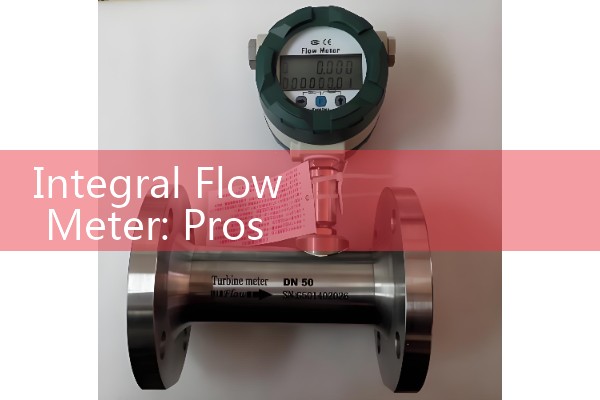
For small dosing lines and spas from DN15 to DN50, the Blue White variable area pool flow meter works well for local verification. It is unpowered, direct reading, and easy to replace. For main recirculation lines from DN50 to DN200, we recommend the Silver Instruments electromagnetic flow meter with a compact or remote converter. The compact version costs less and installs quickly. The remote version is useful in pump rooms where the display must be mounted at eye level or away from flooded pipe trenches. The output can be wired to a chlorine controller or a BMS via 4-20 mA, pulse, or RS485 Modbus. Accuracy is 0.5 percent of reading across the calibrated range. The PTFE liner and 316L electrodes resist pool water with chlorine levels up to 3 mg/L and occasional shock dosing.
What to Send for a Fast Quote
Send us the pool water volume in m3, the target turnover time in hours, the pipe outside diameter or DN, the normal pump flow rate, and the output signal you need. We also need the chlorine dosing method because gas chlorine, liquid sodium hypochlorite, and salt chlorination affect material choice. This is not a simple catalog selection. With those six data points we recommend a meter model and give a price in one business day. Contact Silver Automation Instruments at Tel: +86-135-1213-1526, Whatsapp: 86-135-12131526, or WeChat: +86 13512131526. Email is also available through our website flow-meter.com.au.
FAQ
Can I use a Blue White pool flow meter on a commercial main recirculation line?
You can for pipe sizes up to about DN50 or low flow applications. For a DN100 or larger commercial line, a Blue White variable area meter becomes difficult to read and may restrict flow. Most contractors switch to an electromagnetic flow meter at that point.
What flow range do I need for a standard 25 m pool?
A 25 m pool with a water volume of 250 to 400 m3 needs a flow rate of 40 to 100 m3/h depending on the turnover time and local code. Size the meter so the normal flow sits in the middle of the range.
Does Silver Automation Instruments stock Blue White pool flow meters?
We can source Blue White pool flow meters for smaller lines and we supply industrial grade electromagnetic meters for larger recirculation loops. We can also quote an equivalent Blue White model if your specification is fixed.
What output signal do pool control systems usually accept?
Most modern pool controllers accept a 4-20 mA analog signal or a pulse signal. Some larger aquatic centres use RS485 Modbus for the BMS. We build all three outputs into the Silver Instruments electromagnetic meter.
How do I avoid false flow readings from chlorine dosing lines?
Install the meter after the filter and after any gas injection point, not before. Use a strainer upstream if the water carries debris. For electromagnetic meters, keep the sensor flooded at all times and avoid mounting it at the highest point of the pipe.