

 Current position > News detail
『Car Flow Meter: Diagnosing Automotive Engine Intake Mass Airflow Failures』Related information(v cone flow meter|rotary gas meter|gallon meter|gear meter|metal tube rotameter|glass tube rotameter|nutating disk meter|transit time ultrasonic flow meter|wedge flow meter|pd meters|hydraulic flow meter|ultrasonic water flow meter|water flow meter|air flow meter|magnetic water flow meter|oxygen flow meter|gas flow meter|argon flow meter|air velocity meter|gasoline flow meter|fuel flow meter|ultrasonic water meter|digital water meter|nitrogen flow meter|solid flow meter|Oxygen tank flow meter|digital water flow meter|diesel fuel flow meter|steam flow meter|02 flow meter|compressed air flow meter|oil flow meter|liquid flow meter)
Car Flow Meter: Diagnosing Automotive Engine Intake Mass Airflow Failures
Quick Answer: A failing car flow meter or mass airflow sensor causes rough idle, hesitation, black smoke, and fault codes like P0101, P0102, or P0103. Check live data before replacing parts. Silver Automation Instruments supplies thermal mass flow meters for intake air verification on engine test benches and gas flow loops.
Common Symptoms of a Failing Automotive Airflow Meter
Rough idle is often the first sign. The engine may shake at a stop light and smooth out above 2500 rpm. Hard acceleration can feel flat because the ECU does not know the real air mass entering the cylinders. Black smoke on acceleration means the ECU injects too much fuel. On some vehicles the mass airflow signal stays fixed at 1.2 g/s no matter engine speed. That fixed value is a clear fault. A turbocharged diesel in Thailand had low power and heavy smoke. The workshop replaced the turbo first. The actual problem was a contaminated hot film element in the airflow meter.
What Causes Engine Intake Mass Airflow Failures
Oiled air filters are a common cause. A reusable filter with too much oil can coat the hot wire or hot film. PCV systems push oil vapor into the intake tract. Silicone from gaskets or sealants also contaminates the sensor. Water ingress after driving through floods cracks the film. Vibration breaks internal solder joints. The sensor calibration drifts with age. Dust in dry climates scratches the element. We have seen contaminated hot film elements many times on customer sites in Australia and Southeast Asia.
Diagnostic Steps Using Live Data and a Multimeter
Start with a scan tool. Warm up the engine and read the mass airflow value in grams per second. A 1.6L gasoline engine often shows 2.0 to 4.0 g/s at idle. A 2.0L to 2.5L engine may show 3.0 to 6.0 g/s. Altitude changes these numbers. Snap the throttle open and watch the g/s reading. The g/s reading should climb fast with rpm. If the value moves slowly or stays low, test the sensor output. Hot film analog meters usually output 0.5 volts at idle and approach 4.5 volts at full load. Frequency type sensors may output 1 kHz to 15 kHz depending on flow. But do not use carb spray or brake cleaner on a MAF element. Use a MAF specific cleaner and reset fuel trims after cleaning.
Automotive Hot Film Meters and Industrial Thermal Mass Flow Meters
A car flow meter uses a heated film or heated wire. Air passing removes heat. The electronics measure how much current is needed to keep the element at a constant temperature. Industrial thermal mass flow meters use the same measuring principle for process gas flow. Silver Instruments supplies inline and insertion thermal mass flow meters for compressed air, natural gas, biogas, and engine intake air test benches. The meters include 4-20 mA HART output, RS485 Modbus RTU, and a local display. The probe
When to Use an Independent Air Flow Meter on Engine Test Benches
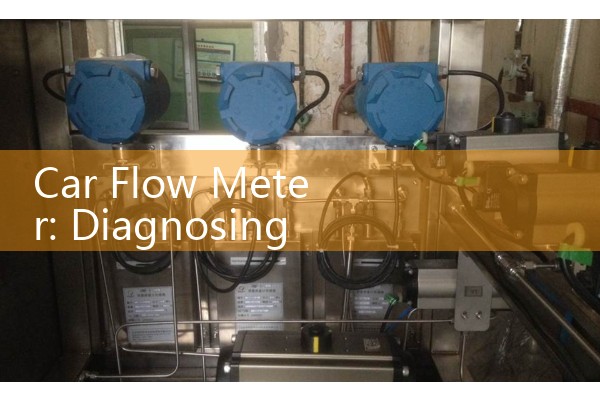
For engine development, repeatability matters. An independent thermal mass flow meter gives a reference signal for intake air mass flow. You can compare the stock MAF sensor against the industrial meter on a chassis dyno or an engine bench. A tuning shop in Australia had a turbocharged 4x4 with a MAF signal that dropped at 4500 rpm. The air filter box had a crack after the filter. Unfiltered air hit the sensor. The shop replaced the housing and the sensor, then checked the intake with an inline flow meter before tuning the fuel map.
Sensor Selection Parameters for Intake Air Measurement
Send us your pipe size from DN15 to DN200, air flow range in kg/h or Nm3/h, pressure in bar, and temperature in °C. Silver Instruments thermal mass flow meters cover flow from 0.5 to 200 Nm3/h depending on line size. Accuracy is 1.5 percent of reading plus 0.5 percent of full scale for many gas ranges. The insertion probe style suits ducts above DN80. Inline styles suit smaller lines. Gas composition matters because thermal meters measure mass flow using the heat capacity of the gas. For air and nitrogen the calibration is standard. For biogas or mixed gases we need the composition for a correct conversion.
FAQ: Automotive Intake Mass Airflow Failures
Q: What does a failing car flow meter do to fuel economy? A: A failing car flow meter can make fuel economy worse by 10 to 25 percent. The ECU uses wrong air mass data and shifts the air fuel ratio rich or lean.
Q: Can a dirty MAF sensor cause a no start? A: A dirty MAF sensor can cause hard starting but rarely a full no start. A fully dead sensor with no signal usually pushes the ECU into a default speed density map, so the engine still starts.
Q: How often should a MAF sensor be cleaned? A: Clean every 30,000 to 50,000 km if you drive in dusty areas. Use a MAF specific cleaner, not brake cleaner or carb spray.
Q: Does Silver Automation Instruments sell direct replacement car MAF sensors? A: No. We supply industrial thermal mass flow meters for engine test benches, gas flow verification, and process loops. For direct replacement, use an OEM or tier one supplier.
Q: What information do you need for a quotation? A: Send your gas type, flow range in kg/h, pipe diameter DN, pressure bar, temperature °C, and output signal preference.
Silver Instruments is a flow meter manufacturer and supplier. We supply thermal mass flow meters for air, nitrogen, biogas, natural gas, and engine test bench applications. Send us your gas type, flow range in kg/h, pipe size DN, pressure bar, temperature °C, and output signal preference. Tel +86-135-1213-1526. Whatsapp 86-135-12131526. WeChat +86 13512131526. Visit flow-meter.com.au for product data sheets and selection guides.