

 Current position > Product detail
『Battery Powered Magnetic Flow Meter: Sourcing Flanged Off-Grid Infrastructure Sensors』Related information(v cone flow meter|rotary gas meter|gallon meter|gear meter|metal tube rotameter|glass tube rotameter|nutating disk meter|transit time ultrasonic flow meter|wedge flow meter|pd meters|hydraulic flow meter|ultrasonic water flow meter|water flow meter|air flow meter|magnetic water flow meter|oxygen flow meter|gas flow meter|argon flow meter|air velocity meter|gasoline flow meter|fuel flow meter|ultrasonic water meter|digital water meter|nitrogen flow meter|solid flow meter|Oxygen tank flow meter|digital water flow meter|diesel fuel flow meter|steam flow meter|02 flow meter|compressed air flow meter|oil flow meter|liquid flow meter)

Battery Powered Magnetic Flow Meter: Sourcing Flanged Off-Grid Infrastructure Sensors
Quick Answer: This page is for engineers and buyers sourcing a battery powered magnetic flow meter with flanged connections for off-grid water, wastewater, and irrigation sites. Silver Automation Instruments supplies DN15 to DN600 full bore models with lithium battery life from 3 to 6 years, RS485 Modbus, pulse, and optional 4-20 mA outputs. Send pipe size, fluid conductivity, pressure in bar, temperature in °C, flange standard, and flow range for a quote.
Why Battery Power Changes the Sourcing Decision
Off-grid water lines often have no AC power. A battery powered magnetic flow meter removes the need for solar panels, inverters, and long signal cable. The meter runs on an internal lithium thionyl chloride battery pack. The pack is sealed inside the converter housing or in a separate battery compartment.
We have seen many remote monitoring jobs where the data logger has solar power, but the flow meter does not. A battery magnetic flow meter can share data through RS485 Modbus to that logger. The sensor wakes up, measures flow, stores the value, and sleeps. Because the meter sleeps between samples, battery life improves.
Flanged Ends for Off-Grid Infrastructure Sensors
Flanged magnetic flow meters are common in water networks because they align with existing PN10, PN16, and ANSI 150 pipe classes. DN50, DN80, DN100, and DN150 flanged meters are the most requested sizes for off-grid municipal water and mining sites. The flange body can be carbon steel, stainless steel, or ductile iron.
A flanged meter is easier to remove than a wafer meter. The bolts are accessible. Maintenance crews can replace the liner or electrodes without cutting pipe. In remote sites, this matters because welding crews are not always available.
Measuring Principle and Conductivity Limits
A magnetic flow meter needs a conductive fluid. The standard minimum conductivity is 5 µS/cm for many full bore meters. Some battery powered models require 20 µS/cm because of low power signal processing. This rule is often ignored. Pure water, demineralised water, or condensate may not work with a magnetic flow meter.
For raw water, bore water, treated wastewater, and river water, conductivity is usually high enough. For diesel, oil, or hydrocarbon service, a magnetic flow meter is not the right tool. For those fluids, see our oval gear flow meter for diesel range on flow-meter.com.au. The meter measures volume flow directly, not mass flow.
Key Specifications to Confirm Before Buying
We recommend you confirm seven items. Pipe size, liner, electrode, flange pressure rating, battery life, output type, and hazardous area needs. A DN100 PN16 EPDM liner with 316L stainless electrodes is a standard starting point for potable water. For seawater, switch to titanium electrodes and a PTFE or EPDM liner.
The flow velocity range is normally 0.1 m/s to 10 m/s. The display can show m3/h, L/s, or total m3. Accuracy for battery powered magnetic flow meters is usually 0.5% of reading or 0.2% for some full bore models. Ask if the spec sheet shows the same accuracy under battery power and under external power. Some models include a PT100 or PT1000 temperature input for bore water data logging.
Real Off-Grid Application Examples
A water utility in Queensland, Australia, needed a DN150 flanged battery magnetic flow meter for a bore water transfer line. Th
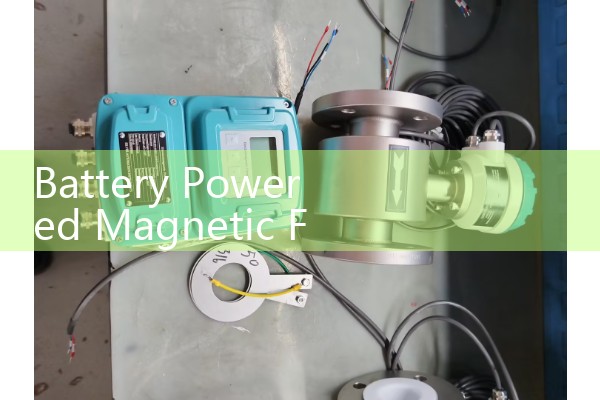
Last year a customer in Vietnam asked us for a DN150 PN16 battery magnetic flow meter on a reservoir inlet. The site had no power. They needed RS485 Modbus to a solar RTU. We supplied a unit with a 5 year lithium pack and a local display.
A mining camp in Chile uses DN80 flanged meters on raw water intake lines. The meters run on lithium batteries and have a 4-20 mA output wired to a small RTU. The RTU is solar powered. The flow meter reports flow and total volume every 15 minutes.
Communication Outputs and Field Wiring
Battery powered magnetic flow meters commonly support RS485 Modbus RTU, pulse, and optional 4-20 mA. Some models support GPRS or LoRa modules. 4-20 mA HART is available on some full bore battery magnetic flow meters, but it draws more power than pulse or Modbus. Check whether the 4-20 mA output is active or passive. A passive output needs external loop power. An active output uses the meter battery. This detail can delay commissioning if not confirmed.
In practice, most engineers skip this part until the meter does not power the loop. A field engineer from our team reminds customers to test the pulse output with a multimeter before closing the manhole. A 50 ms pulse width is common. For a DN200 meter, the pulse value might be 1 pulse per 10 L or 1 pulse per 1 m3.
Sourcing Checklist and Contact
The sourcing checklist is short. Pipe size DN15 to DN600. Fluid type and conductivity in µS/cm. Operating pressure in bar. Fluid temperature in °C. Flange standard PN10, PN16, ANSI 150, or JIS 10K. Liner material. Electrode material. Output type. Battery life target. Hazardous area zone such as ATEX Zone 1 or Zone 2.
Send this data to Silver Instruments. Our sales team will select a meter, confirm battery life, and send a formal quote. Contact us at Tel: +86-135-1213-1526, Whatsapp: 86-135-12131526, or WeChat: +86 13512131526. You can also see the full range at flow-meter.com.au.
FAQ
What is the minimum pipe size for a battery powered magnetic flow meter? DN15 is common for compact industrial designs. DN25 and larger are more common for off-grid infrastructure because of lower pressure loss and better accuracy at low flow.
How long will the battery last in a remote water line? Battery life depends on sampling interval and output load. A 3 to 6 year range is typical. A 1 second interval may drop life below 3 years. A 15 second interval can exceed 5 years. So if a supplier quotes 5 years, ask what sampling rate was used.
Can I use a battery powered magnetic flow meter for seawater? Yes. Select titanium electrodes and a liner suitable for seawater. Check the chloride level and pressure rating. Silver Instruments supplies flanged seawater meters for desalination plant feed lines.
What outputs can I connect to my RTU or SCADA system? RS485 Modbus RTU, pulse, and optional 4-20 mA are common. Wireless modules are also possible for GPRS or LoRa sites. Confirm whether the 4-20 mA output is active or passive.
What information do you need for a quick quote? We need pipe size, fluid type, conductivity, flow range, pressure, temperature, flange standard, output, and battery life. Send these values to Silver Instruments by phone, WhatsApp, WeChat, or through flow-meter.com.au.