

 Current position > Product detail
『Non Intrusive Flow Meter Advantages: Zero Pressure Drop and Zero Contamination』Related information(v cone flow meter|rotary gas meter|gallon meter|gear meter|metal tube rotameter|glass tube rotameter|nutating disk meter|transit time ultrasonic flow meter|wedge flow meter|pd meters|hydraulic flow meter|ultrasonic water flow meter|water flow meter|air flow meter|magnetic water flow meter|oxygen flow meter|gas flow meter|argon flow meter|air velocity meter|gasoline flow meter|fuel flow meter|ultrasonic water meter|digital water meter|nitrogen flow meter|solid flow meter|Oxygen tank flow meter|digital water flow meter|diesel fuel flow meter|steam flow meter|02 flow meter|compressed air flow meter|oil flow meter|liquid flow meter)
Non Intrusive Flow Meter Advantages: Zero Pressure Drop and Zero Contamination
Quick Answer: Non intrusive flow meters clamp onto the outside of a pipe. They never touch the fluid. This means zero pressure drop, zero contamination risk, and no direct contact with corrosive or sanitary media. For chemical dosing, ultrapure water, or abrasive slurries, this design eliminates two of the biggest headaches in process measurement.
What Does "Non Intrusive" Really Mean in a Flow Meter
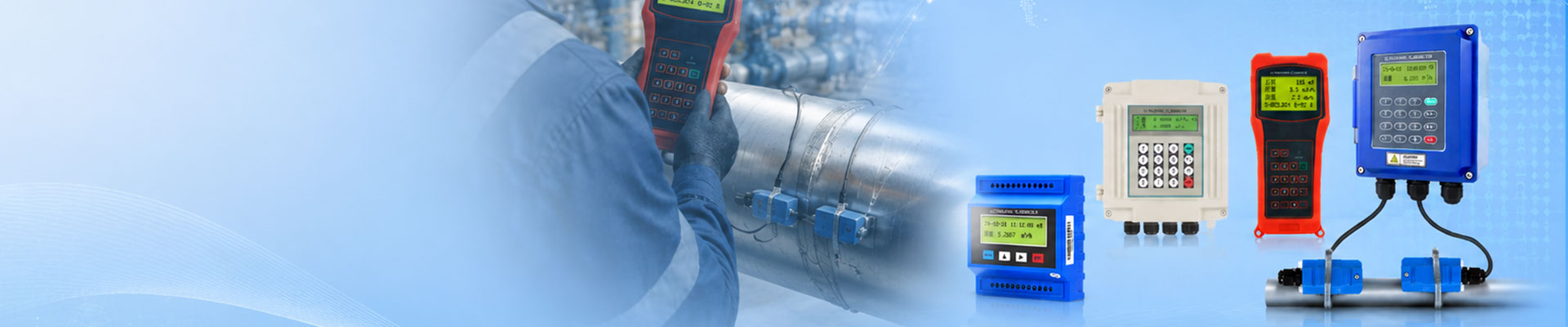
A non intrusive flow meter mounts externally on an existing pipe wall. There is no sensor in the flow stream. No spool piece. No cutting or welding. For a clamp-on ultrasonic meter, the transducers sit on the outside of a pipe made of metal or plastic. The signal passes through the pipe wall, into the fluid, and back. Nothing inside the pipe can corrode, clog, or create a leak path. In the field, many engineers call this "no wetted parts" technology. That description is useful but incomplete. A magmeter with a plastic liner still has wetted electrodes. A Coriolis meter has wetted tubes. Non intrusive means truly zero wetted components.
Zero Pressure Drop Protects Pump Energy and Line Capacity
Any inline flow meter introduces some pressure loss. An orifice plate can drop 0.2 bar to over 1 bar depending on the beta ratio. A Coriolis meter has a small pressure loss from its tube geometry. A turbine meter adds a restriction. These losses add up across a plant. Multiply a 0.5 bar drop across 12 flow meters and you pay for that energy every day. A non intrusive clamp-on ultrasonic meter adds no obstruction. The pipe inside diameter stays the same. The flow profile is undisturbed. In a chilled water loop in a Philippine semiconductor plant, replacing inline magmeters with clamp-on ultrasonic meters reduced pump head demand by 1.3 bar across the secondary loop. That saved an estimated USD 2,100 per year in electricity for a single pump. For viscous fluids above 50 cP, even small pressure drops can require larger pumps or higher motor ratings. Avoid that capital cost from day one with a zero pressure drop meter.
Zero Contamination Means Safe Measurement for Food, Pharma, and UPW
Any wetted metal or plastic can leach ions, trap bacteria, or react with high-purity water. In a pharmaceutical water for injection (WFI) loop, a stainless steel inline meter body must be electropolished to Ra ≤ 0.5 µm and pass rigorous CIP and SIP cycles. A non intrusive meter skips all of that. The sensor never contacts the water. There is no dead leg, no elastomer seal, no potential for biofilm. For ultrapure water (18.2 MΩ·cm) used in a Thai electronics factory, clamp-on ultrasonic meters avoided the risk of metallic ion contamination that would ruin chip yields. In food and beverage plants, non intrusive meters simplify 3-A sanitary requirements because the equipment list shows no wetted parts. No cleaning validation needed. That shortens plant commissioning time by several days.
Real Process Fluids Where Non Intrusive Flow Meters Excel
We have seen clamp-on ultrasound used on 32% hydrochloric acid at 35°C in an Indonesian nickel processing plant. The PTFE-lined pipe was not rated for inline flow element insertion. A clamp-on meter on the outside of the pipe gave a stable signal through the thick lining with our high-power transducers. In a Vietnamese latex paint factory, an inline oval gear meter seized after two weeks because of pigment sedimentation. They switched to a non intrusive ultrasonic meter on the 2-inch discharge line after the filter. Zero stoppages. In Saudi Arabia, a desalination plant uses our non intrusive meters on the brine reject line. The 70°C high-salinity water previously destroyed two magmeter electrodes in six months. The external ultrasonic sensors solved that permanently because they never see the hot brine.
Silver Instruments Non Intrusive Flow Meter Options
At Silver Automation Instruments, we supply two main types of non intrusive flow meters. The first is a clamp-on transit-time ultrasonic flow meter. It handles clean liquids with less than 3% suspended solids or bubbles. Pipe sizes from DN15 to DN6000, temperatures from -40°C to 200°C with high-temperature coupling gel and fixtures. Output is 4-20 mA HART, RS485 Modbus, and pulse. Accuracy can reach ±1% of reading under good installation conditions. The second type is a clamp-on Doppler ul

How to Specify a Non Intrusive Flow Meter Correctly
Most engineers skip this part and order a generic clamp-on meter. Then the reading jumps around. The real work happens before quoting. We ask for these details: exact pipe outer diameter (not just DN), pipe material and wall thickness, liner material and thickness if lined, fluid type, fluid temperature range, and presence of solids or gas bubbles. For ultrasonic meters, a stainless steel pipe with a thick oxide layer can attenuate the signal. A pipe with external corrosion or loose paint needs surface preparation. A short straight run before and after the transducer location is critical. For transit-time meters, 10D upstream and 5D downstream is standard. In practice, we have installed on 5D upstream with a flow conditioner and still got ±1.5% accuracy. Provide us the details and we will run a signal feasibility check before quoting.
When Non Intrusive Is Not the Right Choice
Non intrusive technology has limits. It cannot measure low-conductivity fluids with magmeter principles. It cannot measure gas flow with clamp-on ultrasound unless the pipe is completely full of a liquid. It struggles with pipe materials that transmit sound poorly, such as certain composite or concrete pipes. If you need custody transfer accuracy of ±0.2% for oil sales, a Coriolis meter is still the better choice. If you need verification that the flow meter can be calibrated in a lab, a wetted inline meter is easier to handle. But for 80% of plant measurement points, zero pressure drop and zero contamination outweigh these limitations.
FAQ
Q: Can a clamp-on ultrasonic meter work on a lined pipe?
A: Yes, if the liner is well bonded and not delaminated. We have tested our meters on PTFE, PFA, and rubber-lined steel pipes up to 12 mm thick. Signal penetration depends on liner material density and acoustic velocity match with the fluid. We need the liner thickness and material to confirm.
Q: What is the minimum conductivity for a non intrusive magmeter?
A: There is no true non intrusive magmeter. A magnetic flow meter requires electrodes in contact with a conductive fluid. If you need non contact measurement for a conductive liquid, clamp-on ultrasonic is the solution. Minimum conductivity is not a factor for ultrasound.
Q: Do non intrusive meters need periodic recalibration?
A: The electronics can be checked with a simulator. The transducers do not drift because there is no mechanical wear. In many Oil and Gas facilities, non intrusive meters are verified annually by comparing against a tank level reading or a reference meter. Send us your measurement point data and we can suggest a field verification plan.
Q: Can I use a non intrusive flow meter on a vertical pipe with upward flow?
A: Yes, and we recommend it for liquids where air bubbles might collect. Vertical upward flow keeps the pipe full. A clamp-on ultrasonic meter works well in this orientation. Ensure the liquid is clean or has consistent bubble distribution.
Q: What is the price of a non intrusive flow meter from Silver Instruments?
A: A basic clamp-on transit-time meter for DN50 clean water with 4-20 mA output starts around USD 780 FOB Nanjing. Price increases with larger pipe sizes, high-temperature transducers, ATEX certification, and data logger functions. Send us your pipe size, fluid, temperature, and output signal requirements to [email protected] for a precise quotation.
Get a Quote and Technical Review
Tell us your pipe outside diameter, wall thickness, material, fluid, and temperature. We will confirm if non intrusive measurement is viable for your line. Reach Silver Automation Instruments at [email protected] or call +86-135-1213-1526. WhatsApp: 86-135-12131526, WeChat: +86 13512131526. We respond within one business day with a technical review and price.