

 Current position > Product detail
『Seal Cooling Flow Meter: Protecting Industrial Mechanical Rotating Shafts』Related information(v cone flow meter|rotary gas meter|gallon meter|gear meter|metal tube rotameter|glass tube rotameter|nutating disk meter|transit time ultrasonic flow meter|wedge flow meter|pd meters|hydraulic flow meter|ultrasonic water flow meter|water flow meter|air flow meter|magnetic water flow meter|oxygen flow meter|gas flow meter|argon flow meter|air velocity meter|gasoline flow meter|fuel flow meter|ultrasonic water meter|digital water meter|nitrogen flow meter|solid flow meter|Oxygen tank flow meter|digital water flow meter|diesel fuel flow meter|steam flow meter|02 flow meter|compressed air flow meter|oil flow meter|liquid flow meter)
Seal Cooling Flow Meter: Protecting Industrial Mechanical Rotating Shafts
Quick Answer: A seal cooling flow meter measures the small water or oil stream that cools and lubricates the mechanical seal around a rotating shaft. If the flow drops below a safe threshold, the meter sends a low flow alarm and can stop the pump or compressor before the seal fails. Silver Instruments supplies electromagnetic and thermal mass flow meters for seal cooling loops from DN15 to DN50 with 4-20 mA HART output.
Why Seal Cooling Flow Matters for Rotating Shafts
Mechanical seals separate process fluid from the atmosphere around a rotating shaft. They rely on a stable fluid film. That film removes heat and prevents dry contact. When cooling flow drops, the seal face temperature climbs within minutes. The elastomer O-rings harden. The carbon face cracks. At a palm oil refinery in Malaysia, a pump seal failed after 12 minutes of low cooling water flow. The repair cost was 6500 USD. A simple flow alarm could have prevented the shutdown.
Most engineers skip this part. They assume the seal water supply stays constant. But strainers clog. Valves get closed by mistake. Sometimes the pipe scales up. In practice, a low flow alarm installed on the seal water line gives you direct proof that cooling is still moving through the loop. That is why more maintenance teams now replace visual rotameters with digital flow meters and relay outputs.
Which Flow Meter Type Fits Seal Cooling Lines
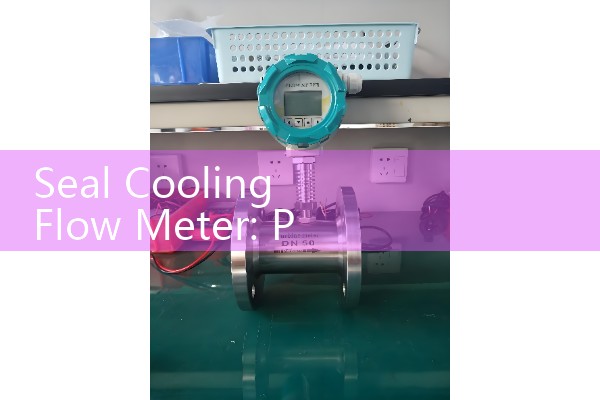
Seal cooling lines are usually small bore. DN15 and DN25 are the most common sizes. The flow rate is often between 2 L/min and 15 L/min for pump shafts from 30 mm to 80 mm. Silver Instruments electromagnetic flow meter is a strong fit for clean water-based seal coolants. It has no moving parts and does not add pressure drop. The wetted parts can be PTFE liner and 316L stainless steel electrodes. This combination handles clean water, demin water with low conductivity down to 5 µS/cm, and water glycol mixtures.
For very low flow below 0.5 L/min, a Coriolis mass flow meter is more stable. It measures mass flow directly and is not affected by conductivity or viscosity changes. But a Coriolis meter costs more than an electromagnetic meter. Thermal mass flow meters are an option for gas seal purge lines. They work well for nitrogen or instrument air flows from 0.2 Nm³/h to 20 Nm³/h.
Key Parameters to Specify for a Seal Cooling Flow Meter
You need to match the meter to the actual seal water flow range. Too high a range loses the small flow signal. Too low a range can be damaged by normal flow peaks. For a DN15 line, a typical range of 0 to 15 L/min works for most single seals. For a double mechanical seal with throttle bush, the flow may be as low as 1.5 to 4.0 L/min. In that case use a DN15 electromagnetic flow meter with a low flow cut-in at 0.1 L/min.
Specify the operating pressure and temperature. Seal cooling water often runs at 6 to 16 bar and 20 to 80 °C. The meter body should handle at least PN40 if the loop is connected to the pump discharge. For high temperature seal flush above 120 °C, choose a remote transmitter instead of a compact unit. The sensor can be installed close to the seal, and the electronics stay away from heat and vibration.
Output should include 4-20 mA HART plus one or two relay alarms. The relay can be set at 2 L/min for low flow. The HART si
Installation Details That Prevent False Alarms
Do not install the flow meter right after a valve or elbow. A straight run of 5 pipe diameters upstream and 3 downstream is enough for a DN15 or DN25 electromagnetic flow meter. The pipe must stay full at all times. For vertical installation, flow should go upward. Then air bubbles escape from the measuring section. Air pockets are a common source of false low flow readings. We have seen this on customer sites many times. The customer swears the meter is faulty, but the pipe is half empty. A simple check with a sight glass often solves the argument.
If the seal cooling water contains iron particles or rust from carbon steel pipe, include a magnetic filter before the meter. The filter protects the seal and keeps the electrode clean. The same filter protects the meter from conductive deposits that can shift the reading.
Alarm Logic and Shutdown Integration
Most mechanical seals fail faster than operators can respond to an alarm. So the low flow signal should be wired into the pump trip circuit or the compressor control panel. In a gas processing plant in Oman, the maintenance team set two thresholds. The first threshold at 4 L/min triggers a warning on the DCS. The second threshold at 2 L/min opens the motor starter and stops the pump. This two-step logic gives the operator time to check the source of low flow without losing the seal.
For critical unspared pumps, some users add a delay timer of 3 to 5 seconds. This prevents nuisance trips during brief pressure dips. Use a flow meter with a relay that supports configurable hysteresis. Then the alarm clears only when the flow returns above 3 L/min, not just above the trip point.
FAQ
What is the typical flow range for a seal cooling flow meter?
For most pump seal cooling loops, the flow range is 2 to 15 L/min on DN15 to DN25 lines. Double seals can run from 1.5 to 4 L/min.
Can an electromagnetic flow meter work with seal water that has low conductivity?
Yes. Silver Instruments electromagnetic flow meters work with liquids down to 5 µS/cm. For demineralized water below 5 µS/cm, use a Coriolis mass flow meter.
What output signals should a seal cooling flow meter have?
Use 4-20 mA HART for the control system and at least one low flow relay for alarm or shutdown trips.
What pressure rating is needed for seal cooling water?
PN40 is common for pump discharge side seal flush lines. High temperature seal flush above 120 °C should use a remote transmitter.
What is the best material for seal cooling water service?
PTFE liner with 316L electrodes works for clean water, water glycol, and most seal coolants. Use Hastelloy C electrodes if trace chlorides are present.
Get a Quote from Silver Automation Instruments
Send us your pressure (bar), temperature (°C), pipe size (DN), and flow range (L/min). Include the low flow trip point and the type of seal coolant. We will recommend a meter with the correct liner, electrodes, and alarm configuration. See our seal cooling flow meter range at flow-meter.com.au.
Tel: +86-135-1213-1526
Whatsapp: 86-135-12131526
WeChat: +86 13512131526